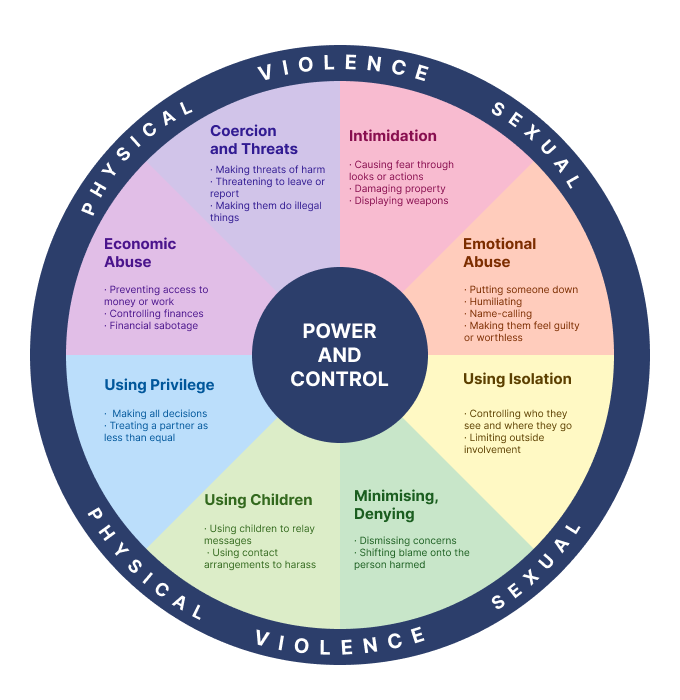
Understanding Abuse, Equality & Your Safety
Abuse and family violence can take many forms. It isn’t always physical – and it isn’t always visible. Understanding what abuse is, how it works, and the difference between healthy equality and power-based control is an important first step in recognizing unhealthy relationships and knowing when to seek help
This page explains:
- What abuse and family violence are
- The patterns and common behaviours involved
- The different types of abuse
- What healthy equality looks like in relationships
What Is Abuse?
Abuse is any behaviour used by a person to gain power and control over another person. It can happen between partners, within families, in whanau/households, and in intimate or dating relationships. Abuse is never your fault. Abuse may be one event, or a pattern of behaviour over time – but the key element is that it damages your safety, dignity, and equality.
Understanding Abuse
Types of Abuse
Below are the most common forms of abuse. Someone may experience one or many of these:
Physical Abuse
Using physical force such as:
- Hitting, slapping, punching
- Pushing or shoving
- Throwing objects
- Choking or restraining
These behaviours cause injury, pain, or fear.
Emotional & Psychological Abuse
This includes:
- Name-calling or constant criticism
- Humiliation or belittling
- Intimidations and threats
- Manipulation of your emotions
- Making you feel worthless or crazy
These behaviours attack your mental well-being and sense of self.
Sexual Abuse
Any unwanted sexual contact or pressure, including:
- Forced sexual activity
- Coercion or manipulation around sex
- Making you feel obligated to do something sexual
- Using sex as control or punishment
Sex should always be consensual and respectful.
Financial & Economic Abuse
Controlling money and resources in ways that limit your independence:
- Taking or withholding money
- Controlling bank accounts or income
- Restricting access to transport, phone, or work
- Making you financially dependent
This form of abuse restricts your choices and freedom.
Verbal Abuse
Using words to hurt, threaten, or dominate, including:
- Yelling or screaming
- Insults and threats
- Public humiliation
- Constant criticism
Words can cause deep emotional harm.
Digital & Technology-Facilitated Abuse
Using technology to control, monitor, or harass, such as:
- Excessive texting or monitoring phones
- Tracking your location
- Posting private information online
- Using social media to initmidate
Abuse through technology can be just as harmful as in-person abuse.
Cultural or Spiritual Abuse
Undermining or disrespecting your identity, values, or traditions by:
- Mocking cultural practices
- Preventing you from engaging with community or tikanga
- Using cultural expectations to control you
Everyone’s culture and spirituality deserve respect.
Coercive Control
A pattern of behaviour meant to dominate your life by:
- Isolating you
- Monitoring your daily activities
- Restricting who you see or where you go
- Making rules you must follow
Coercive control is often subtle but deeply damaging.